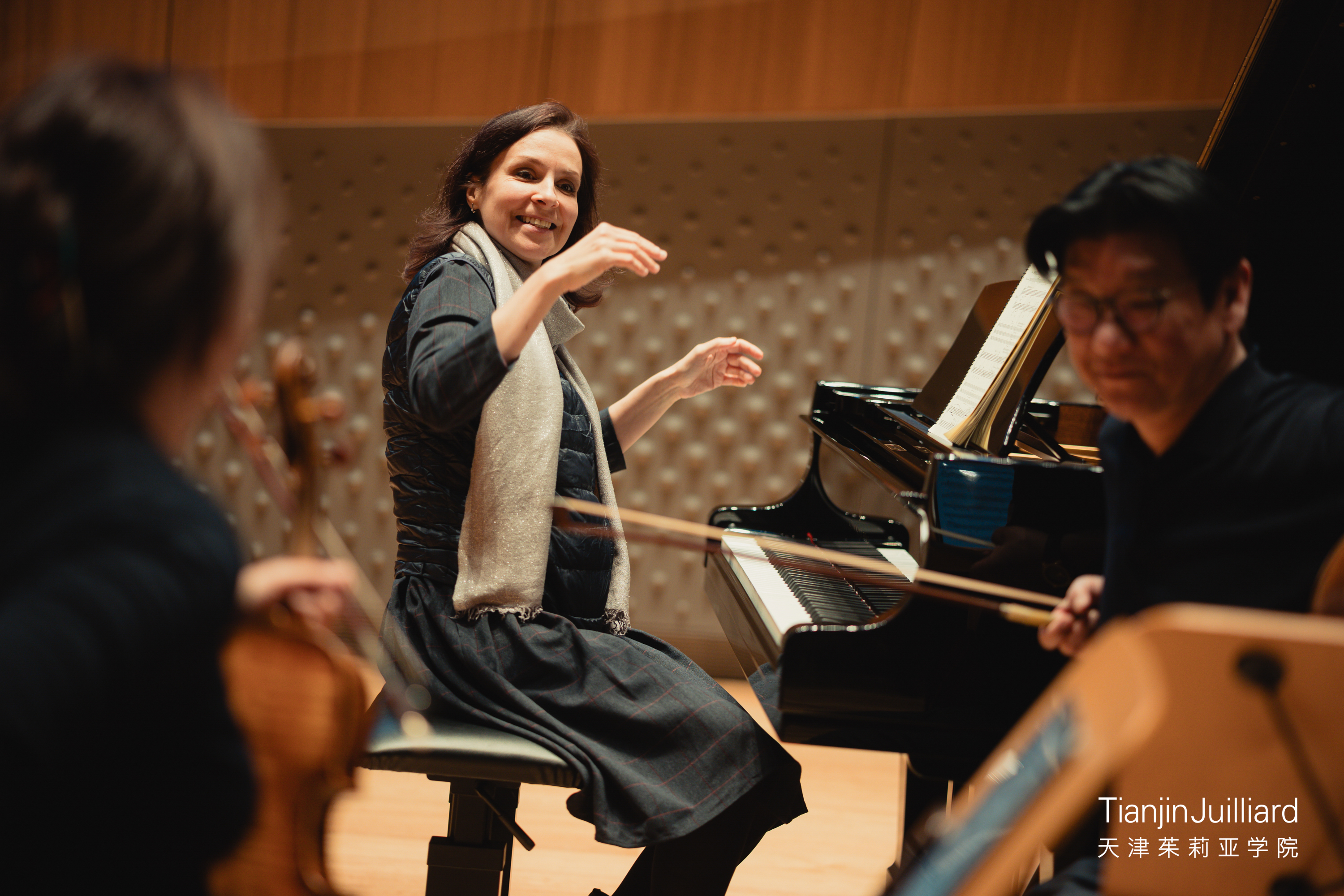
For more than six years, Natalia Katyukova has guided collaborative piano students at Tianjin Juilliard in developing their skills and artistic confidence. A Grammy-nominated pianist, she draws on her experience at the Metropolitan Opera and The Juilliard School, where she worked closely with singers and pianists, as well as her international collaborations with instrumentalists. In this interview, Katyukova reflects on how her students continue to inspire her, the balance between leading and listening, and her advice for pianists pursuing a collaborative career.
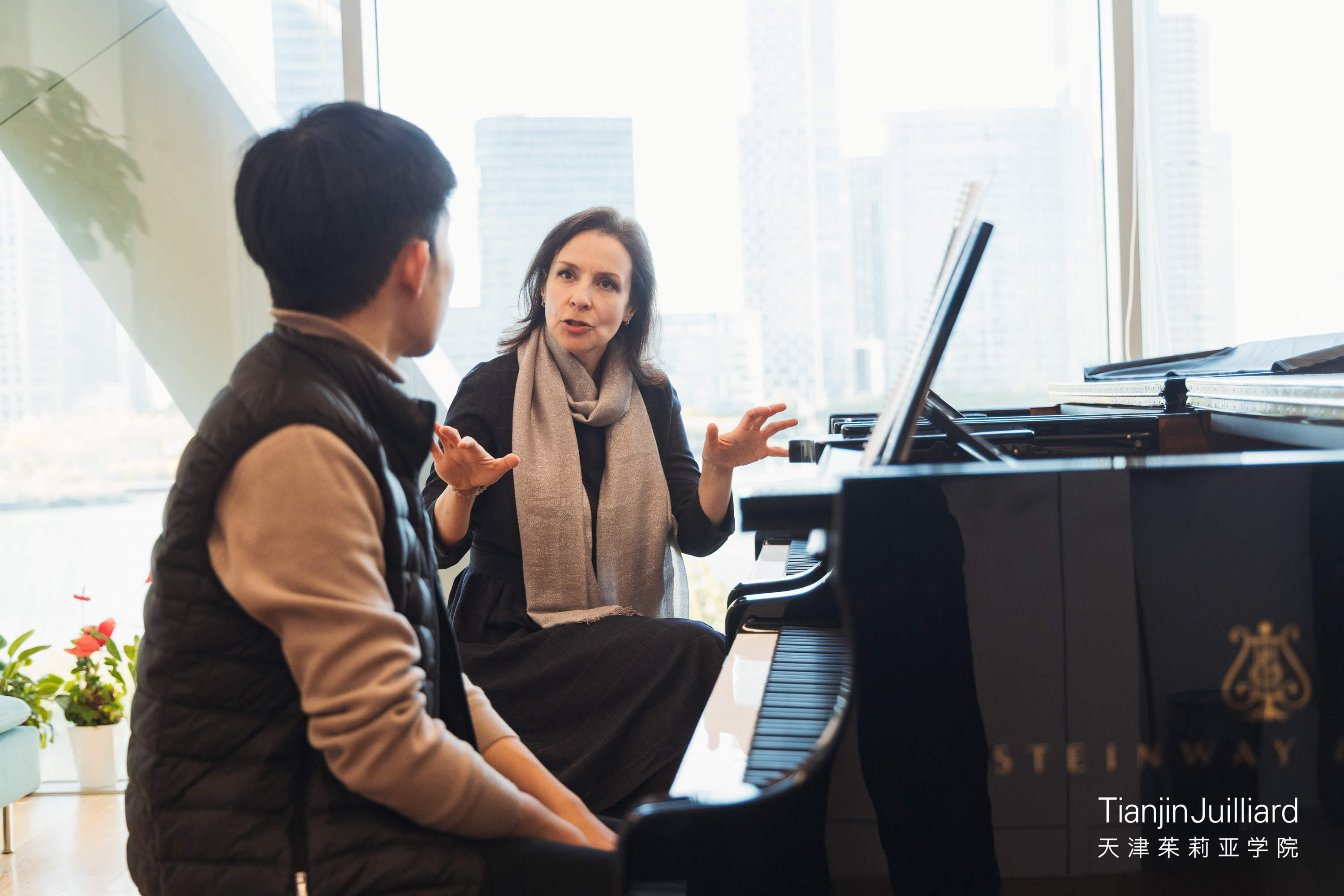
What has surprised you most about teaching at Tianjin Juilliard, and how has the experience shaped you as an artist and educator?
What has surprised me most is the curiosity and discipline of the students! Teaching in this multicultural environment has helped me become more patient as an educator and expanded my own artistic horizons as a performer.
What makes Tianjin Juilliard a distinctive place to study collaborative piano?
At Tianjin Juilliard, students receive rigorous Juilliard training paired with extensive performance opportunities.
Our multidisciplinary curriculum approaches the pianist as a collaborative partner, chamber musician, vocal coach, and conductor from the keyboard all at once. Rather than specializing in just one corner of the repertoire, students navigate fluently between instrumental sonatas, concertos, orchestral keyboard literature, and vocal coaching. Students do not simply accompany; they learn how to lead rehearsals, coach lyric diction, and shape complex musical architecture across a wide spectrum of genres. Performance opportunities include instrumental and vocal recitals, orchestral appearances, outreach programs, and even jazz jam sessions. This broad practical immersion transforms them into agile, highly adaptable musical partners ready for the modern stage.
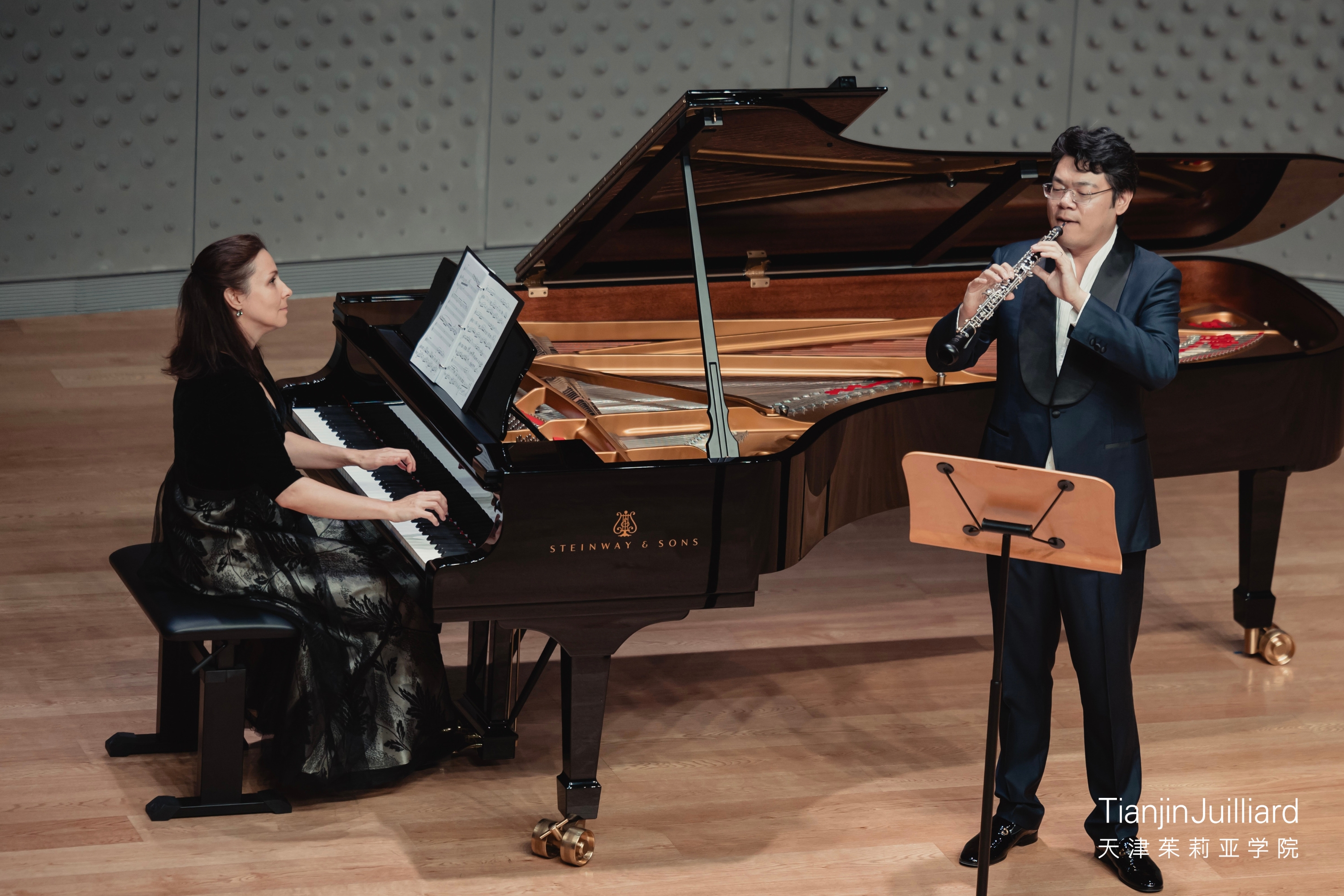
How do you help students develop artistic confidence and their own musical identity while remaining responsive to collaborators?
Artistic confidence grows through strong professional skills and regular performance experience. Both are central to our training at Tianjin Juilliard. I encourage students to think and lead like a conductor while remaining sensitive to their partner’s individual musical voice.
What qualities, interests, and aspirations do you value most in prospective collaborative piano students, and what advice would you offer pianists considering this professional path?
I value intellectual curiosity and genuine enthusiasm for a wide range of collaborative repertoires. My advice is to read through and listen to as much music as possible, whether by attending concerts or sight-reading with friends.
How do you see the role of collaborative pianists evolving across China and Asia?
Collaborative pianists are increasingly recognized not simply as accompanists, but as artistic partners in instrumental and vocal performance. As this recognition grows across Asia, I believe there will be increasing demand for versatile collaborative pianists.