
Every year, our faculty travel across the world to engage with musical communities outside of the walls of Tianjin Juilliard. These relationships are foundational to the work of our faculty as artists and educators, and as each new year begins, we look forward to the lessons that they bring back.
Nancy Zhou, who joins our resident faculty this fall, spent part of her summer in western North Carolina as a soloist with the Brevard Music Center orchestra, joining other Tianjin Juilliard students, faculty, and staff who participated in the festival in various capacities. As she begins teaching at Tianjin Juilliard, we asked her to reflect on her experience and how it influences her approaches to performance and pedagogy.
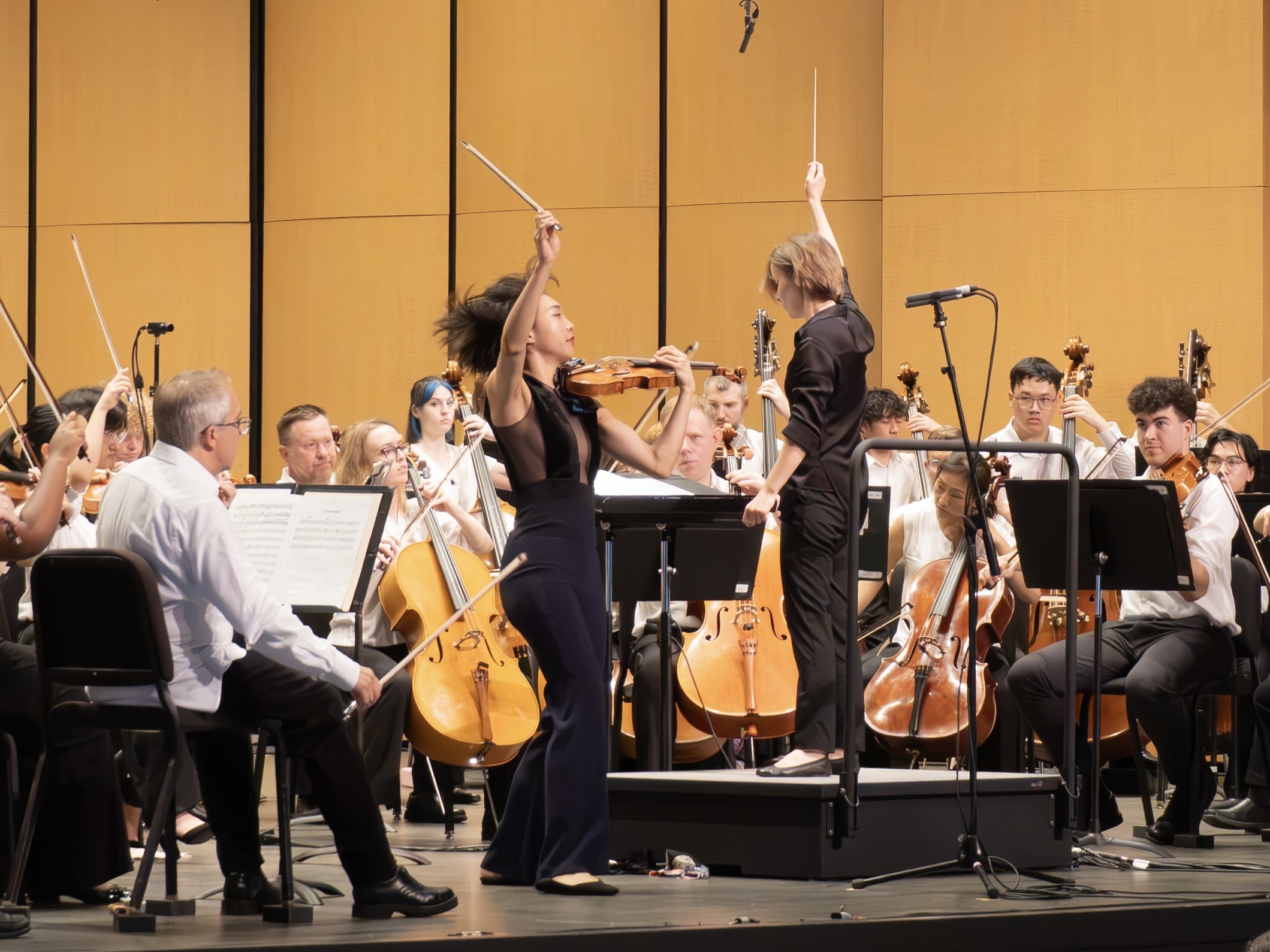
Earlier this summer, you performed Shostakovich’s Violin Concerto No. 1 at Brevard, a piece that asks for enormous individuality from the soloist but also depends on a very precise relationship with the conductor and orchestra. How do you approach preparing for a concerto performance?
The Shostakovich concerto is often touted as a symphony for violin and orchestra, rather than strictly as a concerto. This approach can be applied to repertoire across the board: one begins to think in layers, how the “solo violin” engages in primary, secondary, and even tertiary roles with other sections of the orchestra. In turn, one starts exploring different sound colors that best complement the individual timbres of these sections. One needs to know how to unabashedly take initiative, as well as how to support another instrument in taking initiative without being subordinated.
Tianjin Juilliard students often move between solo, chamber music, and orchestral work. What do you hope they understand about the way those modes of performance inform one another?
It is incumbent to listen simultaneously to yourself and to others in these three modes of playing. It is also incumbent to play with clear specificity yet sensitivity. In this sense, you are constantly negotiating, just like in any human relationship. Lastly, let the music speak and imagine that you and your colleagues are creating a “super instrument,”rather than a random mix of individual instruments.
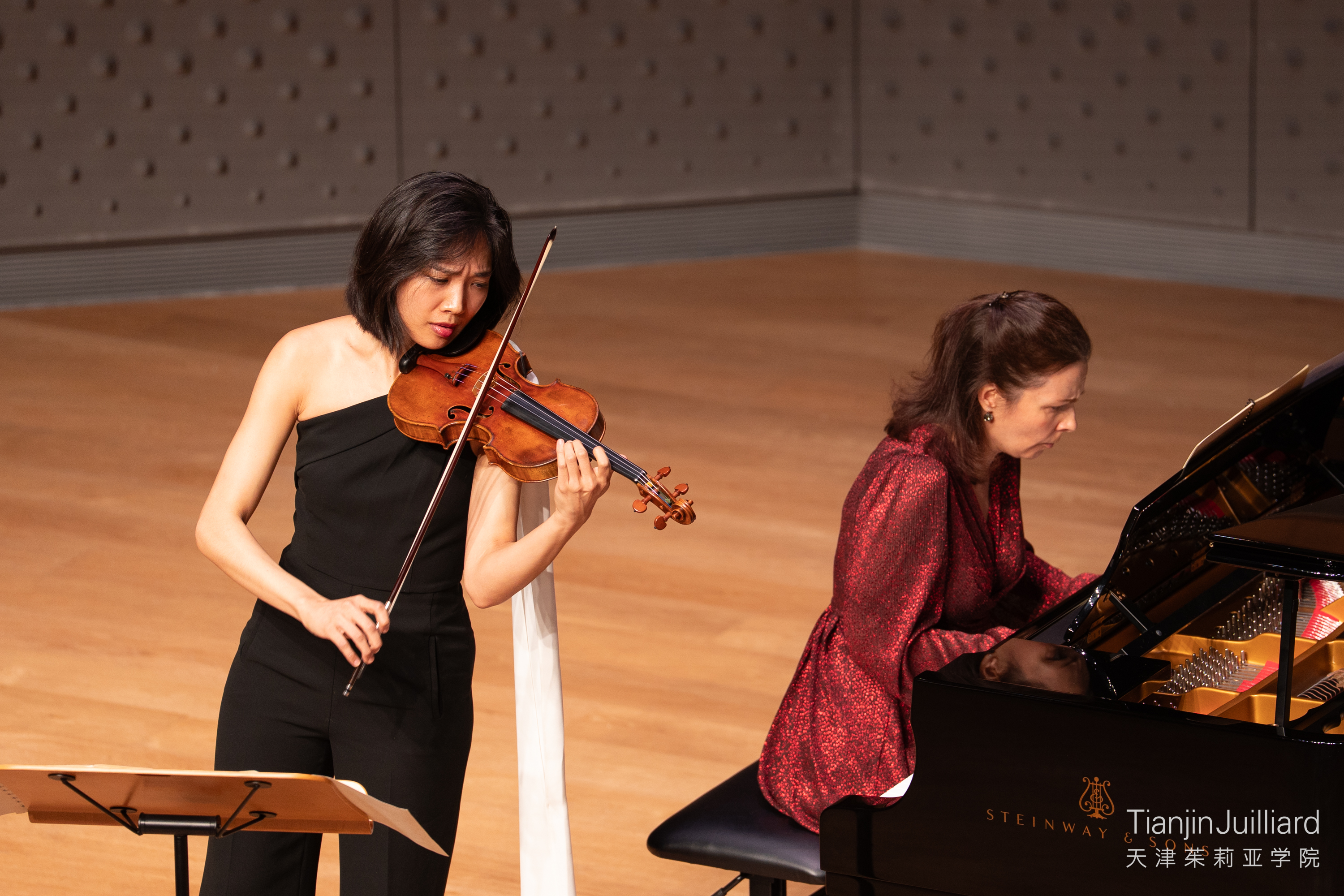
You’ve spoken previously about music in relation to cultural memory and your identity. How might that perspective shape your work with students at Tianjin Juilliard?
It is to encourage each other to grow as artist-citizens. We work in synergy with our environment and community, and so I think the end-goal is this constant pursuit of how to better understand each other and how to better reestablish connection with the Earth that we as humanity share with others.
How do you advise young soloists on retaining their personal style while adapting to orchestral and ensemble collaboration?
Personal style comes naturally as a byproduct of learning to honestly accept oneself (not false humility or arrogance). Curiosity and discovering something that enraptures your attention is a vital spark to that journey towards self-acceptance. I believe that only through self-acceptance can you begin to learn how to embrace others in a collaborative setting.