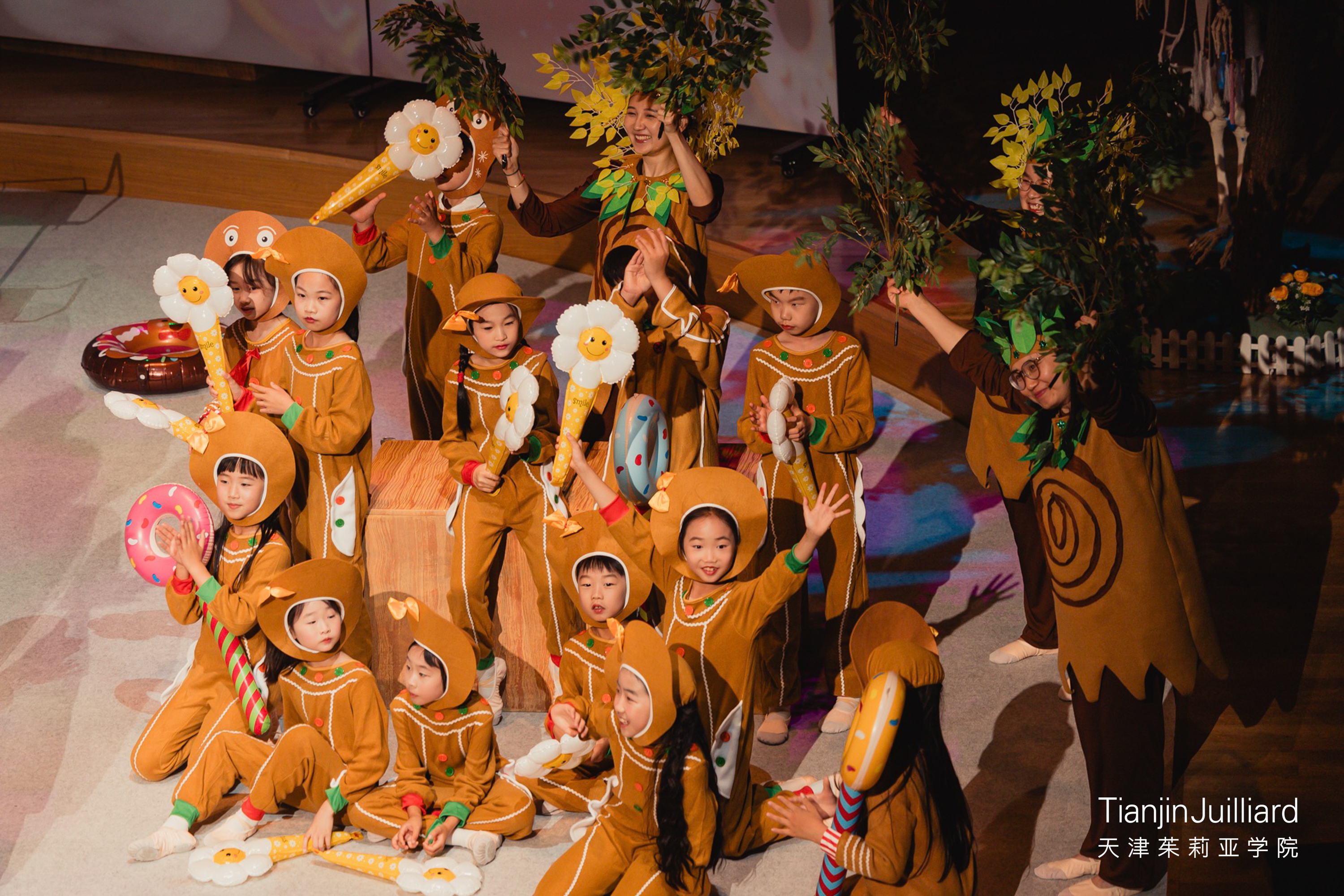
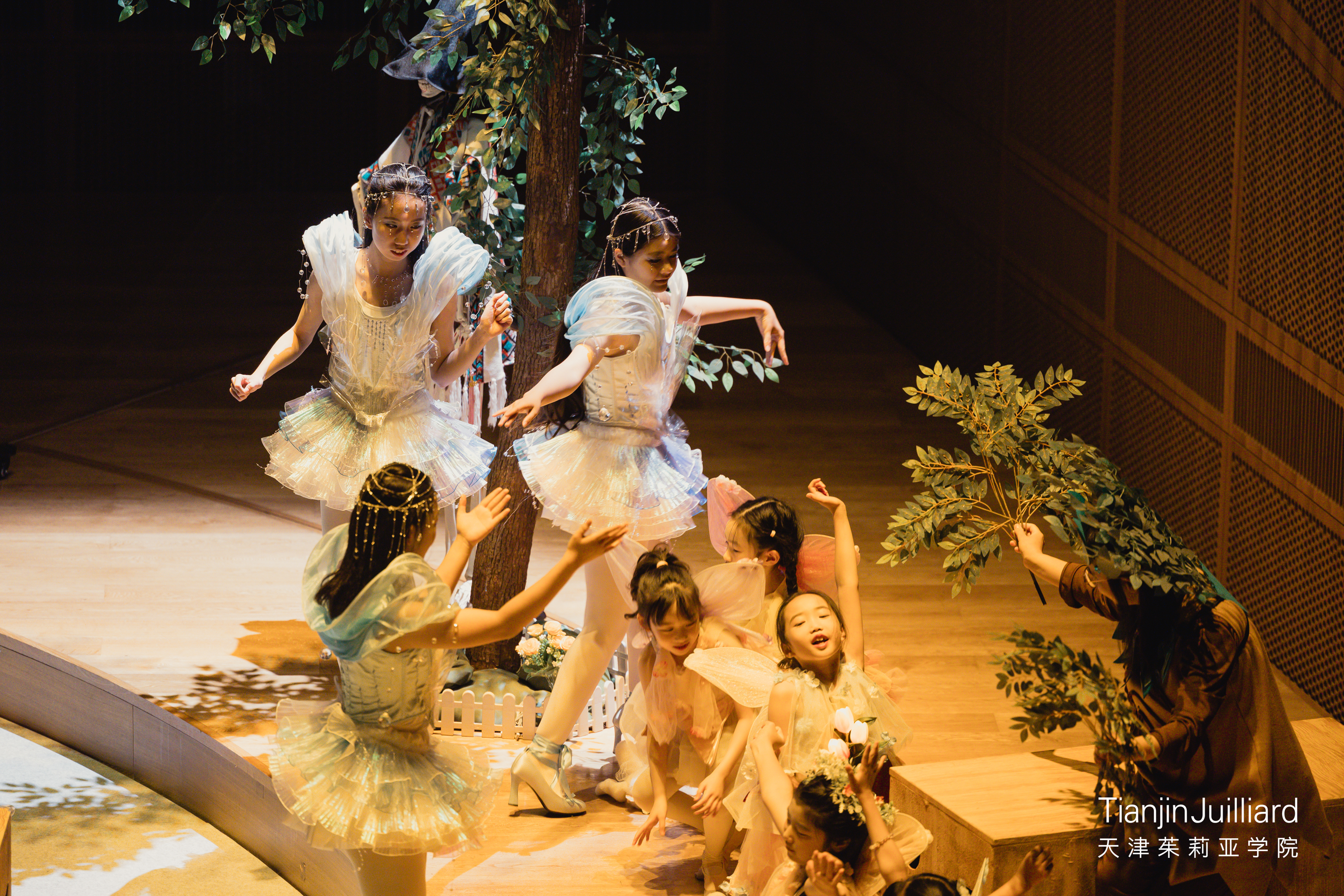
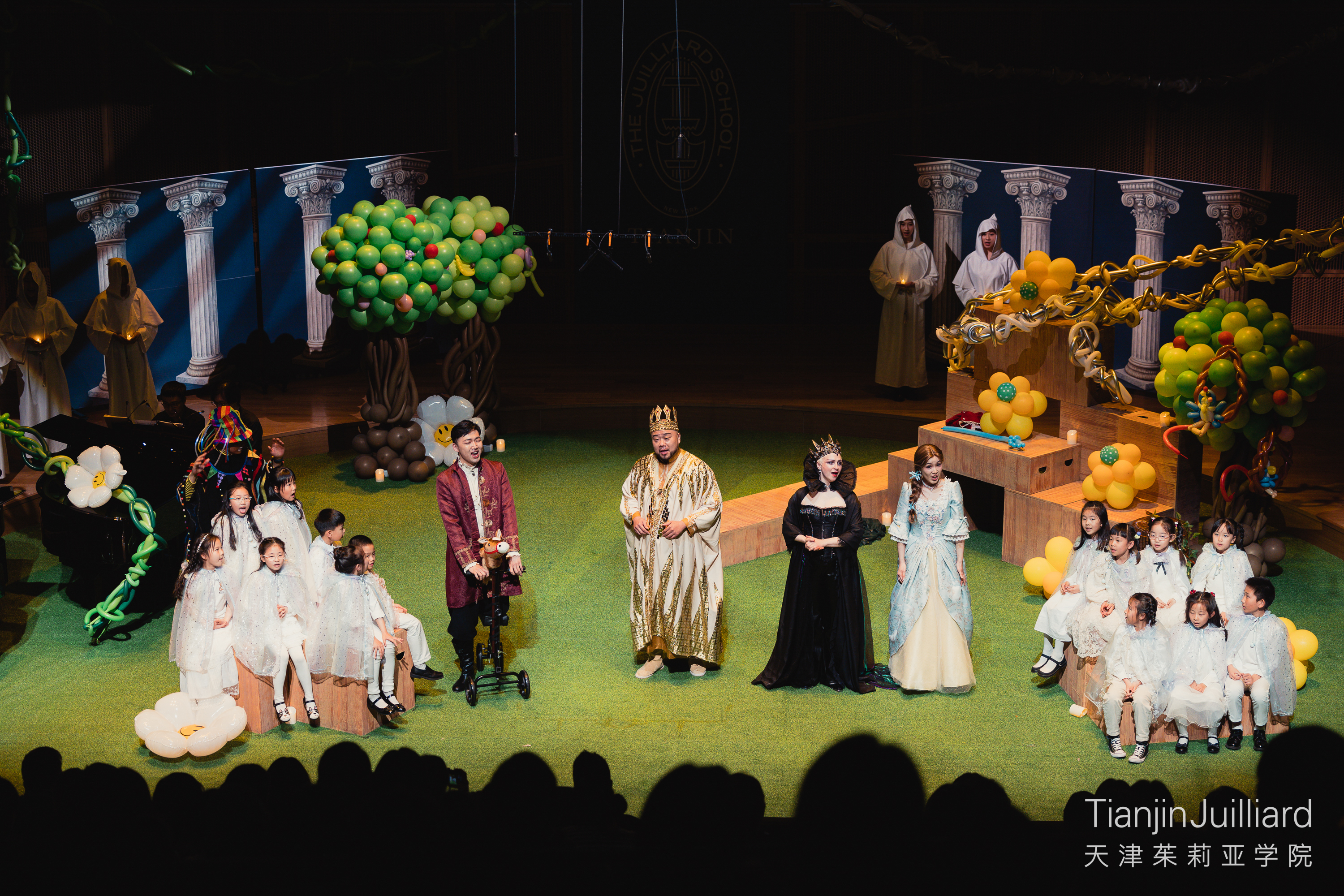
Last month, the Tianjin Juilliard Concert Hall was transformed into a magical forest, where two mischievous children turned action heroes, threw the wicked witch into a burning furnace, and liberated gingerbread children from her ferocious appetite and enchanted prison. In this spectacle of light show and animation, Graduate Studies faculty and students provided the adaptations of the orchestra and libretto; Pre-College and Music Development Program (MDP) voice faculty incarnated characters of good and evil immortalized by the Brothers Grimm; Pre-College students became heavenly creatures bestowing power and courage upon the children; MDP students inhabited the stage with more cuteness than one could bear; and their mothers portrayed nurturing trees that offered guidance and protection to the little ones astray in the forest.
What was achieved in the Concert Hall that night was much more profound than what meets the eye. Beyond the magical kingdom and children’s fairy tales lies a myth surrounding opera – a genre that has both enchanted and mystified audiences. To many, opera is a world of foreign languages, exotic characters and convoluted plots that don’t seem relatable. Yet beneath these conventions lies an art form that ultimately sheds light on universal human emotions and enduring values. Our production of “A Family Show: Hansel and Gretel” proved that language was no barrier. Music itself connected the dots and wove the story together for our performers and audience. For many people sitting in the audience, this might have been their first encounter with such theatrical grandeur, but I am convinced that no one was intimidated by the art form itself or the fact it was sung in German – yes, by our Pre-College and MDP students alongside professional singers and Tianjin Juilliard faculty!
As I listened to the angelic voices melting into the lush harmonies of Humperdinck’s score, peppered with dialogue in the Tianjin vernacular about local cuisine, I found myself thinking: no other classical music genre offers, or requires, this kind of cross-pollination between artistic disciplines. This was opera—not for an elite circle of connoisseurs, but for the families and the broader community. I mused about what other conservatory would aim to train vocal coaches without having a voice department. Yet this wonderful irony has given rise to a remarkable ecosystem for the vocal arts at Tianjin Juilliard, namely the Vocal Institute.
I’ve been fascinated by the human voice since the age of sixteen (which was quite a long time ago), drawn to its universality, accessibility, individuality and expressivity. I devoted my studies and invested my heart into this passionate pursuit, which we call the vocal arts. I even made a good living out of it. All that would have been impossible without singers. There is an ecosystem on which vocal coaches, and indeed the whole singing profession, rely to make training and performance possible.
What does this training entail? What does the term “vocal arts” mean and what do vocal coaches do? There may be perceptions that opera seems unapproachable, incomprehensible, expensive or even irrelevant. Simply put, vocal arts encompass the multifaceted skills that enable a human being to become a singing communicator who can act with convincingly emoted words and touch people with the vibration of two delicate membranes in the throat. Opera is one form within the whole scope of vocal arts, and it happens to be the most versatile and complex one. Vocal arts as a comprehensive field offer endless opportunities to transcend space and time, cross cultures and languages, test physical prowess and endurance, and connect humanity to profound depths and heights of emotions through the sheer power of the sung word. Vocal coaches are the practitioners who support and promote the art form through education.
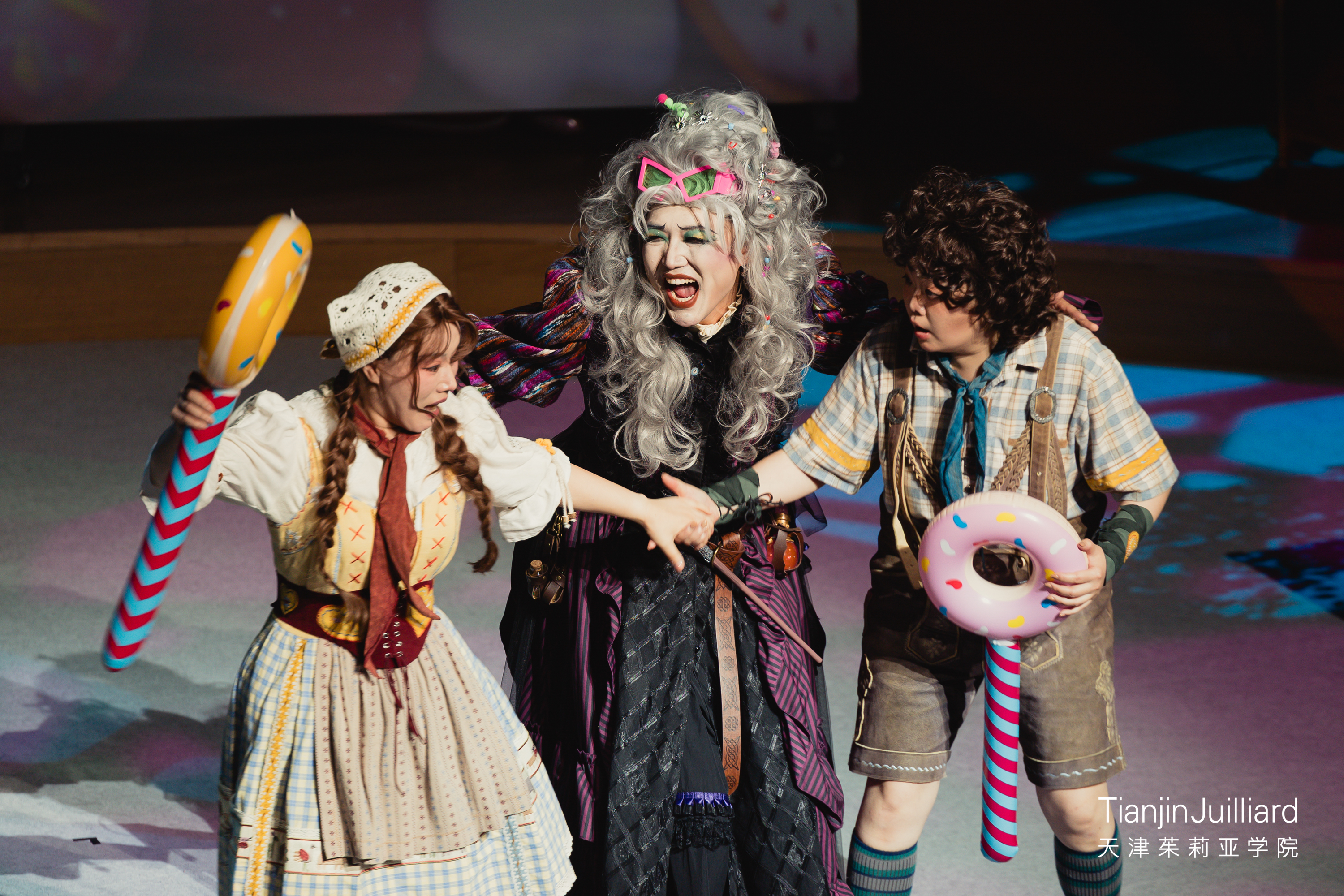
Having dedicated 35 joyous years to vocal arts, I have come to realize how the magic of the vocal arts and the power of human voice can touch us all in countless ways, if we allow the art form to descend from its lofty pedestal to a living stage of interactions, exchanges and communal activities. The Tianjin Juilliard Vocal Institute exists to provide an antidote to the highfalutin assumptions that our very own profession tends to make, and in that process, risk alienating audiences, exhausting budgets, fossilizing the art form into a product people wouldn’t even pay to look at. The unfettered storytelling, organized chaos, and extraordinary resource mobilization that took place during the production of “A Family Show: Hansel and Gretel” last May are all a testament to the kind of work we do at Tianjin Juilliard – work done in equal measure with collaboration and excellence.
I crafted the mission of the Tianjin Juilliard Vocal Institute a few years ago with the following mandate: “to create a unique ecosystem in which practitioners, students and aficionados of the vocal arts can enjoy the customized well-rounded learning experience; learn, appreciate and promote the art form from grassroots to professional levels in China.” Going forward, we must include “the community” in the mission since it is an essential part of this ecosystem, as a contributing partner and co-creator of all the stories we seek to tell.
At Tianjin Juilliard, the spirit of collaboration reigns, and the principle of authenticity gives all participants in every family show, Liederabend, voice lesson, acting class, vocal coaching, yoga class, and diction drill the opportunity to be heard and cherished. The human voice resonates through our music-making, and the singing impulse shapes how we formulate and structure our pedagogy. I can’t think of a more joyful, raucous, and fun way to live, think, teach, and work. Blessed be everyone who wants to sing. Hooray to anyone who has a voice and wants to share it!
Katherine Chu serves as the dean and collaborative piano faculty of The Tianjin Juilliard School.