
To this day, Brian Donguick Lee (MM ’26, Instrumental and Orchestral Studies, cello) still remembers his first orchestra rehearsal in the Tianjin Juilliard Concert Hall. The piece they were rehearsing – Beethoven’s Symphony No. 1 in C major, Op. 21 – presented its challenges, but what he remembers most vividly is finding himself taking in the significance of the moment of how far he had come and how remarkable it was to be there, after years of finding his way to music.
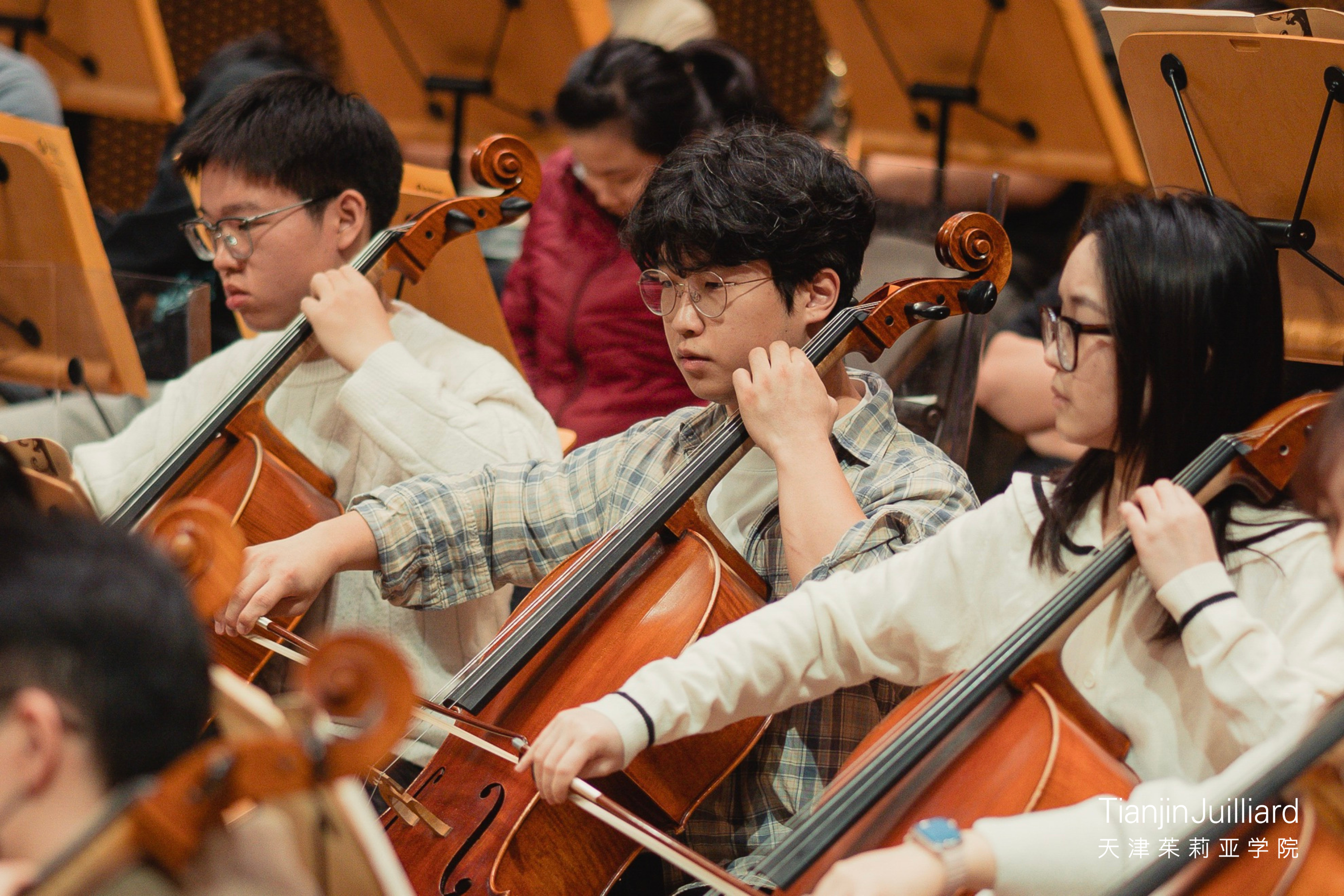
Brian began playing the cello at 11, relatively late compared with many of his peers. At first, music was simply another activity to include in his college applications. But two years later, after joining a youth orchestra in Pennsylvania and performing major orchestral repertoire for the first time, something changed. “I couldn't stop thinking about music,” he said. “I was struggling a lot in high school, and music became something where I could find relief.”
Music gradually became more than an extracurricular activity. A semester abroad at the University of Oxford introduced him to an even richer musical environment, giving him more opportunities to play orchestral repertoire and chamber music. “That was when I started thinking, I want to do more of this,” he said. Even so, Brian followed what seemed like the more conventional path. After earning a bachelor's degree in international studies in the United States, he stepped into what many would consider a secure corporate career. It did not take long for him to realize that it was not fulfilling and the opportunities for learning were limited.
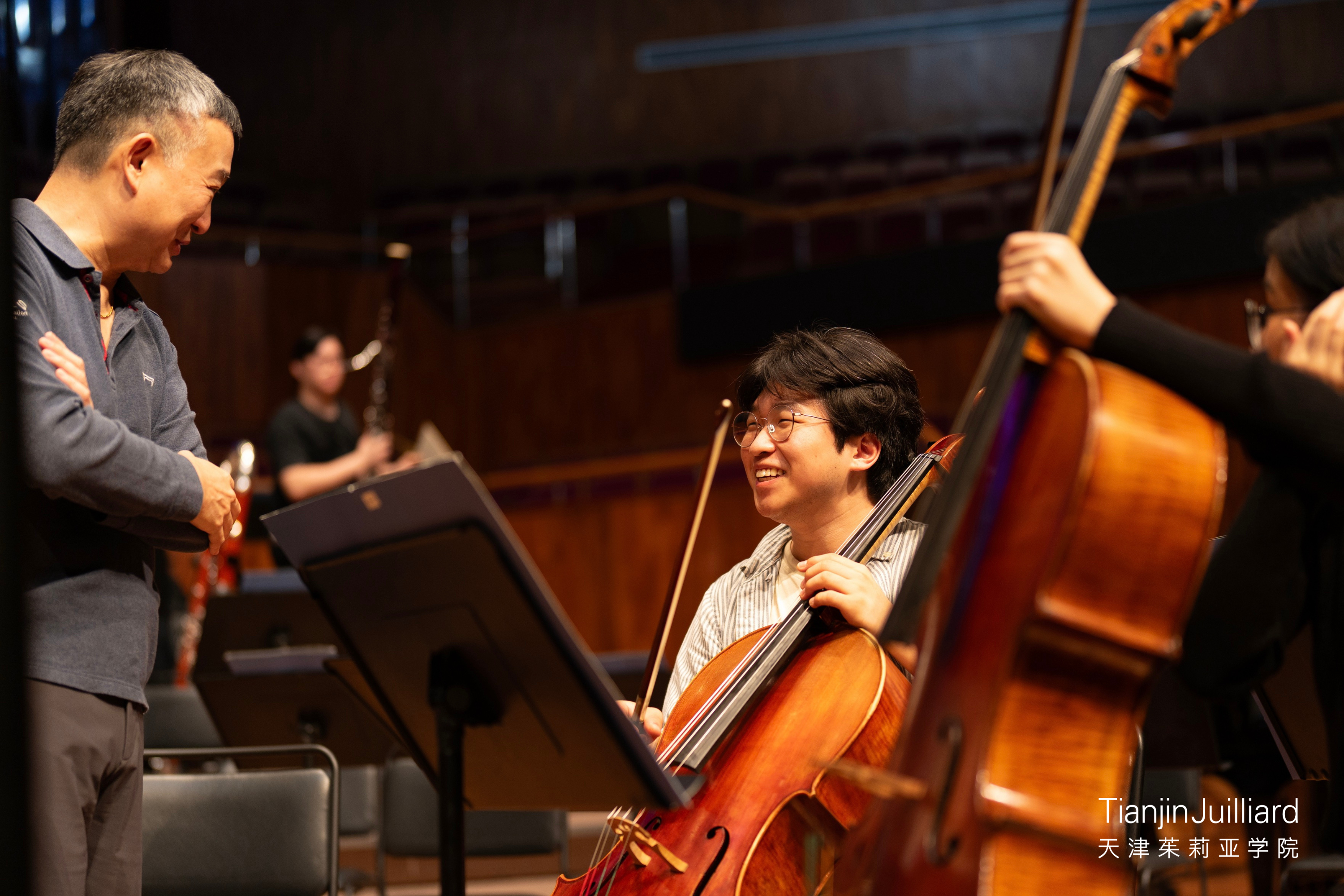
After leaving his office job, Brian spent mornings and evenings practicing cello while preparing applications to music schools. Tianjin Juilliard was his top choice. “The cultural experience was intriguing to me, and the orchestra program here was much more intensive. It was exactly the kind of environment I was looking for,” he said. “The scholarship was appealing as well.”
Unlike many classmates who had spent years undergoing rigorous music training, Brian was studying music theory, ear training, and music history for the first time at Tianjin Juilliard. In many ways, he was starting over — not from a place of limitation, but with the curiosity of someone discovering an entirely new world. “When I arrived, I felt like a blank slate. I feel incredibly lucky to learn from these amazing faculty members and to have access to all these resources. Cello is the reason I wake up each morning. There's just so much to learn, and it feels like an endless journey.”
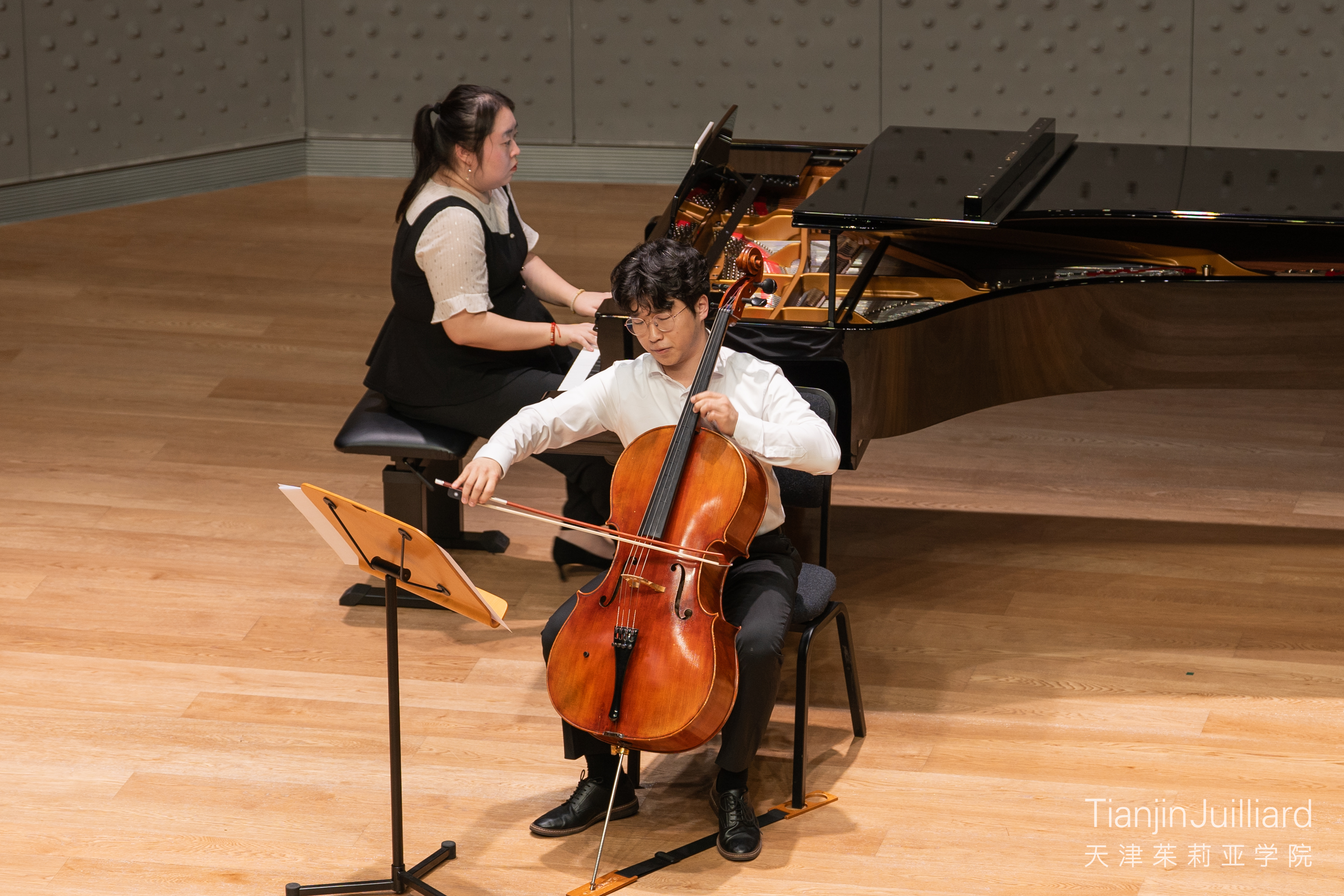
Brian’s background outside music also shaped the way he learned. Studying politics, statistics, public health, and other disciplines taught him not only what to learn, but how to learn. Those experiences influenced the way he approaches music, giving him broader historical and cultural perspectives when interpreting repertoire. “Sometimes people develop a very rigid definition of what music should be or sound like. One advantage of having a different background is that I am open to many new ideas.”
That mindset carried into orchestra rehearsals. One of Brian's most valuable lessons came from an unexpected place: the back row of the cello section. “It’s actually much harder,” he said. “In the front, you can see everything happening. In the back, you have to pay attention, listen more carefully, and become much more independent.”
For Brian, the experience became a lesson in listening, especially to the orchestra as a whole. After one semester, when he performed Debussy's La Mer at the 2025 Tianjin Juilliard Festival Connect, he felt that something had shifted. During the residency at the Xinghai Concert Hall, Brian gained new insights when the orchestra was playing Shostakovich’s Symphony No. 5 in D minor, Op. 47. He began to recognize that his growth was inseparable from the growth of the ensemble around him.

After two fulfilling years, Brian is ready to embark on his next chapter. This fall, he will continue his music studies in Michigan. Looking back, he sees his path not as a detour, but as part of what has made his musical journey uniquely his own. “Being at Tianjin Juilliard has opened so many opportunities for me,” he said. “I would like to share that it’s important to embrace all possibilities and not be afraid of change!”